
USV AS’s first USV launched at GONDAN shipyard
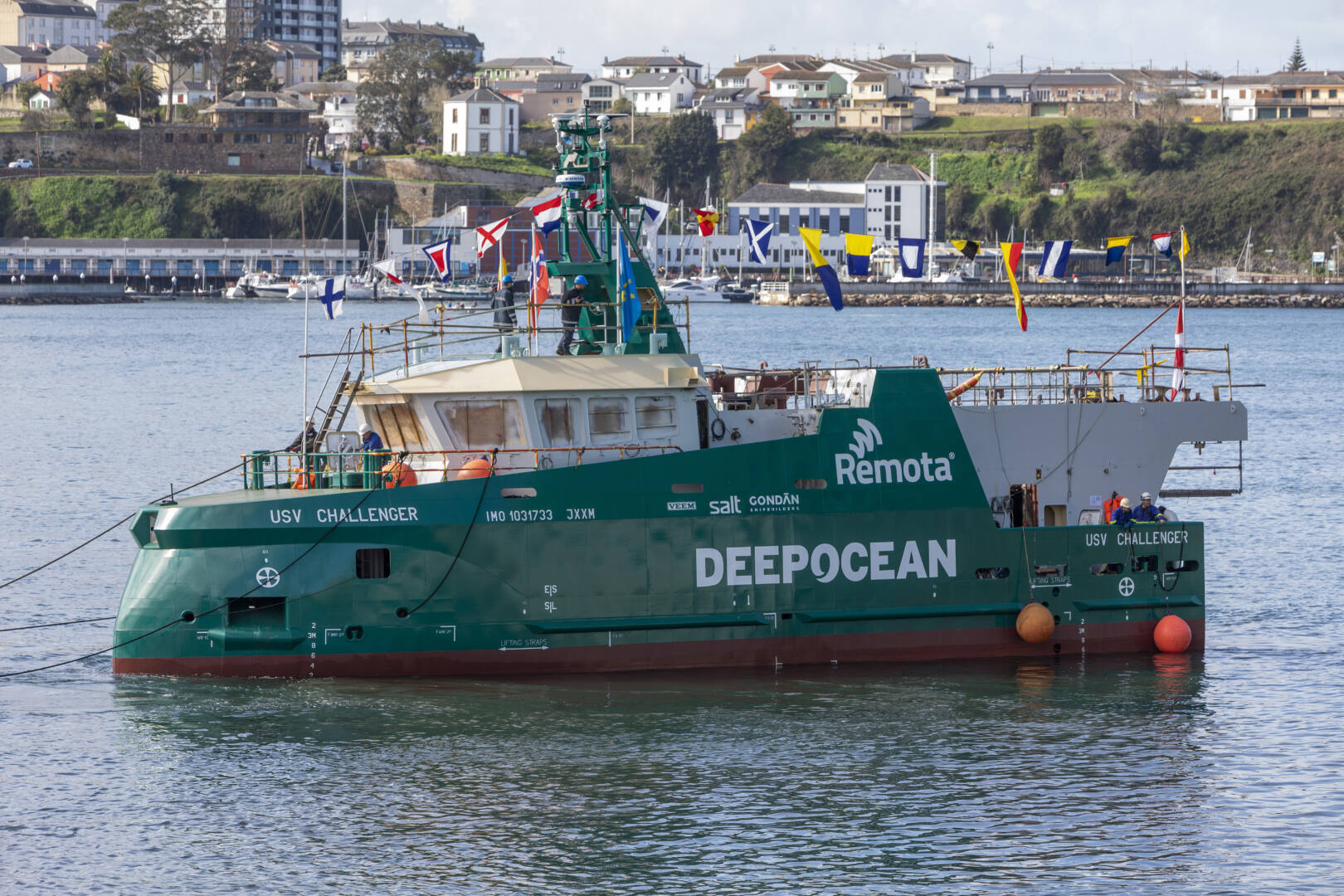
GONDAN shipyard in Figueras, Castropol, Spain, announced the launch of its first unmanned vessel in its shipbulding portfolio. Shipyard’s hull C506 is an advanced Uncrewed Surface Vessel (USV) “USV Challenger” for USV AS, a Norwegian company formed by DeepOcean, Solstad and Østensjø Rederi.
The USV was designed by Salt Ship Design to carry out underwater maintenance and inspection missions. It is 24 meters long and 7.5 meters wide and is equipped with a hybrid diesel-electric propulsion system with 500 kWh batteries. The vessel has a system of sensors, cameras and antennas on board that will allow it to carry out underwater inspection work such as the launch and recovery of underwater vehicles (WROV) capable of diving to a depth of 2000 meters in a completely remote way.
“USV Challenger” will be in the long-term charter by DeepOcean,which is working with several energy operators to explore commercial opportunities for the USV Challenger in the coming years. This innovative solution is expected to reduce CO2 emissions by more than 90% compared to conventional offshore vessels during subsea Inspection, Maintenance, and Repair (IMR) operations.
The USV, Launch and Recovery system (LARS), and ROV will be operated from the Remote Operations Center (ROC) at Killingøy, owned by Remota, which now includes a dedicated room specifically designed for USV operations.
? Source: GONDAN shipyard, DeepOcean, Remota
? Photo: GONDAN shipyard
See also related
Companies


